What Is Americana Music? A Singer-Songwriter's Field Guide
What is Americana music? A working singer-songwriter's answer — tracing the genre from its folk and blues roots through country rock to the living rooms and stages where it lives today.
Americana is the broad, living tradition where folk, blues, country, and rock meet — defined less by sound than by a commitment to storytelling, authenticity, and roots. It's the music that happens when you stop chasing trends and start listening to the land.
Someone asks me what kind of music I make and I never know what to say. I usually land on "folk" because it's short and most people have a rough idea of what it means. But it's not quite right. The songs pull from too many places — blues, country, rock and roll, the old Appalachian stuff, the coffeehouse singer-songwriter tradition. There's no clean label for it. And then someone will hear a track like The Southern Winds or Fractured and say, "Oh, that's Americana," and I'll think: yeah. That's probably the closest we're going to get.
So what is Americana music? Let me try to answer that honestly, as someone who's been making it for twenty years without always knowing what to call it.
The Short Answer
Americana is the broad, living tradition where folk, blues, country, gospel, and rock converge — defined less by a particular sound than by a commitment to roots, storytelling, and authenticity. It's music that draws from the deep well of American musical heritage while remaining open to the present. Think of it as a river system: the tributaries are folk, blues, country, bluegrass, soul, and rock. Americana is what you get when those waters meet.
The Americana Music Association, which has been trying to formalize this thing since 1999, defines it as "American roots music based on the traditions of country, folk, blues, rhythm and blues, rock and roll, and other culturally relevant sounds." That's about as precise as anyone's managed, and it's still wonderfully vague. I think the vagueness is the point. Americana isn't a set of rules. It's a disposition. A way of approaching music that says: the past matters, the story matters, the song matters more than the production.
If you're hearing acoustic guitars alongside electric ones, pedal steel next to harmonica, lyrics that read like short fiction or back-porch confessions — you're probably in Americana territory. But you might also hear a full drum kit, a distorted guitar solo, or a gospel choir. The borders are porous by design.
Where It Comes From
Every American genre has roots in the same soil. The work songs and spirituals of enslaved people in the South. The ballads carried over from the British Isles and planted in the Appalachian hills. The blues that grew up in the Mississippi Delta. The country music that came out of the same hollers and churches, just a few valleys over.
For most of the twentieth century, these threads wove in and out of each other without anyone needing to name the weave. Woody Guthrie was folk but also country. Robert Johnson was blues but also the foundation of rock and roll. Hank Williams sang country songs that were really blues songs wearing cowboy hats. Nobody worried about the taxonomy. They were all just playing American music.
The term "Americana" started gaining traction in the 1990s, partly out of necessity. The country music industry had gone pop — big production, big hair, big crossover hits. Meanwhile, a whole generation of artists was making music rooted in the old traditions but uninterested in Nashville's commercial machinery. They needed a name, a shelf in the record store, a radio format. "Americana" was the word that stuck.
But the music itself is much older than the label. When I listen to Townes Van Zandt play Waiting Around to Die — just his voice and a guitar, telling a story so honest it hurts — that's Americana, decades before anyone used the word. When Neil Young plugs in and lets Cortez the Killer unspool for seven minutes of ragged, searching electric guitar, that's Americana too. The name is new. The tradition is ancient.
Folk vs. Americana vs. Country
This is where people get tangled up, and I understand why. The Venn diagram has a lot of overlap. But here's how I think about it, not as an academic but as someone who lives inside these songs.
Folk is the oldest circle. It's the tradition of songs passed down, reworked, and shared — music that belongs to communities rather than individuals. In the modern sense, it usually means acoustic, voice-forward, narrative-driven. Think Pete Seeger, Joan Baez, early Bob Dylan. Folk tends toward the spare. It trusts the song to carry itself without much production.
Country grew out of the same roots but built an industry around them. It has its own history, its own conventions — the twang, the steel guitar, the particular storytelling traditions of heartbreak, honky-tonks, and hard living. Country can be folk's rowdier, more commercial sibling. At its best, it's Merle Haggard or Loretta Lynn — working-class poetry with a backbeat. At its worst, it's whatever's playing in a truck commercial.
Americana is the space where all of this meets and mingles. It's folk with the blues stirred in. It's country without the pop sheen. It's rock and roll that remembers where it came from. An Americana artist might play a set that moves from a fingerpicked ballad to a stomping electric number to an old murder ballad from the 1800s, and none of it feels out of place.
The way I see it: folk is an ingredient. Country is an ingredient. Blues, gospel, rock — all ingredients. Americana is the meal. And like any good meal, it depends on who's cooking and what they grew up eating.
When I was putting together Of The Sun, I wasn't thinking about genre. I was thinking about breath — about songs that stretch and breathe and let you sit inside them. Some of those tracks are clearly folk. Fractured is almost a blues song in disguise. The Evening Wore On drifts into something spacious and atmospheric that doesn't fit neatly anywhere. Americana gave me permission to let all of that coexist on the same record.
The Sound of Americana
If Americana doesn't have a single sound, it does have textures you start to recognize. An aesthetic, maybe. A set of instincts.
Acoustic instruments front and center. Guitar, banjo, mandolin, fiddle, dobro, harmonica, upright bass. Even when the electric instruments show up, the acoustic ones tend to anchor the sound.
Vocals that prioritize character over perfection. This is a big one. In Americana, a voice doesn't need to be technically flawless. It needs to be believable. Think of Townes Van Zandt's voice — weathered, unsteady, completely convincing. Or Chris Whitley, whose voice sounded like it had been dragged through gravel and barbed wire, and was more beautiful for it. You're not listening for polish. You're listening for truth.
Lyrics that tell stories or reveal interior landscapes. Americana inherits the folk tradition of narrative songwriting, but it's not limited to story-songs. It can be impressionistic, imagistic, even abstract — as long as it feels rooted in lived experience. Gregory Alan Isakov writes lyrics that function like landscape paintings: you don't always know the story, but you can feel the weather.
Production that serves the song rather than the other way around. This doesn't mean lo-fi or sparse, necessarily. It means the choices — the reverb, the arrangement, the instrumentation — exist to support what the song is trying to say, not to dress it up for commercial radio.
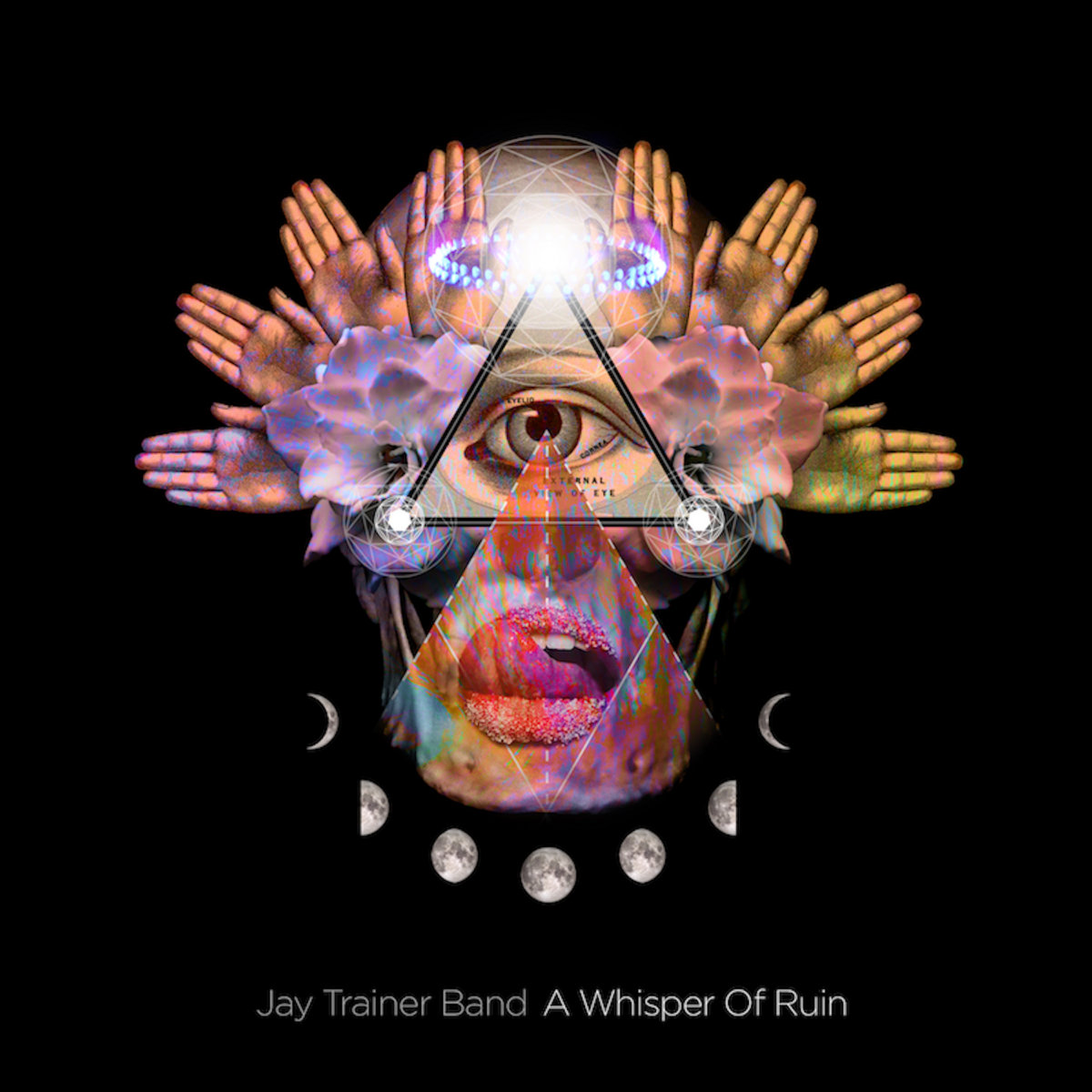
When I recorded A Whisper Of Ruin, the songs belonged to the San Francisco years: written there, recorded there, and performed by multiple musicians. That's an Americana production decision too, even if I didn't think of it that way at the time: let the people and the place into the recording. Let the imperfections stay. Let the song sound like the life around it.
Who's Making It Now
Americana has always been a big tent, and the artists under it are wildly varied. That's the best thing about the genre — it's capacious enough to hold multitudes.
The elder statesmen are still here. Neil Young is still out there, ragged and relentless. Emmylou Harris redefined what Americana could sound like across five decades. Lucinda Williams writes songs that feel like novels compressed into four minutes.
The middle generation — the ones who came up in the 1990s and 2000s — built the infrastructure. Ryan Adams, Gillian Welch, the Drive-By Truckers, Wilco. They proved that roots music could be adventurous, literary, electrically charged.
And now there's a wave of artists pushing the boundaries further. Tyler Childers, who sings about eastern Kentucky with a specificity and tenderness that would make Townes proud. Sierra Ferrell, who sounds like she walked out of a 1940s roadhouse and into the present. Waxahatchee, who moved from indie rock toward country and Americana and found something deeply personal in the process. S.G. Goodman, Charley Crockett, Adia Victoria, Hailey Whitters — all making music that honors the roots while reaching toward something new.
What connects them isn't sound. Tyler Childers doesn't sound like Waxahatchee doesn't sound like the Drive-By Truckers. What connects them is an orientation — toward honesty, toward craft, toward the old songs and the stories they carry.
Why It Matters
There's a reason Americana has grown from a niche radio format into one of the most vital spaces in contemporary music. People are hungry for something that feels real.
We live in an age of algorithmic music — songs engineered for playlists, optimized for the first fifteen seconds, designed to be background noise. Americana pushes back against that. Not with nostalgia, not with some backward-looking fantasy of a simpler time, but with an insistence that music can still be handmade, personal, rooted in place and story and the particular grain of a human voice.
That matters to me as a listener. It matters more to me as a maker.
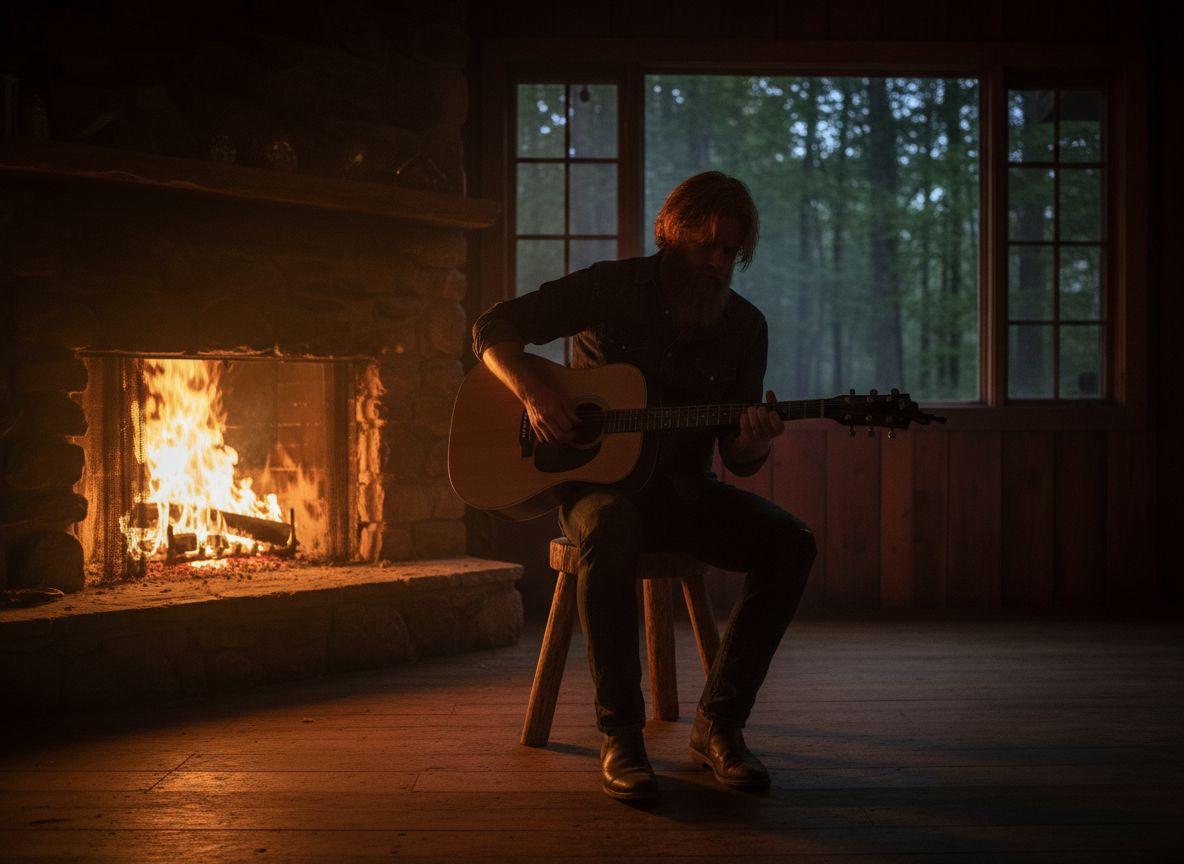
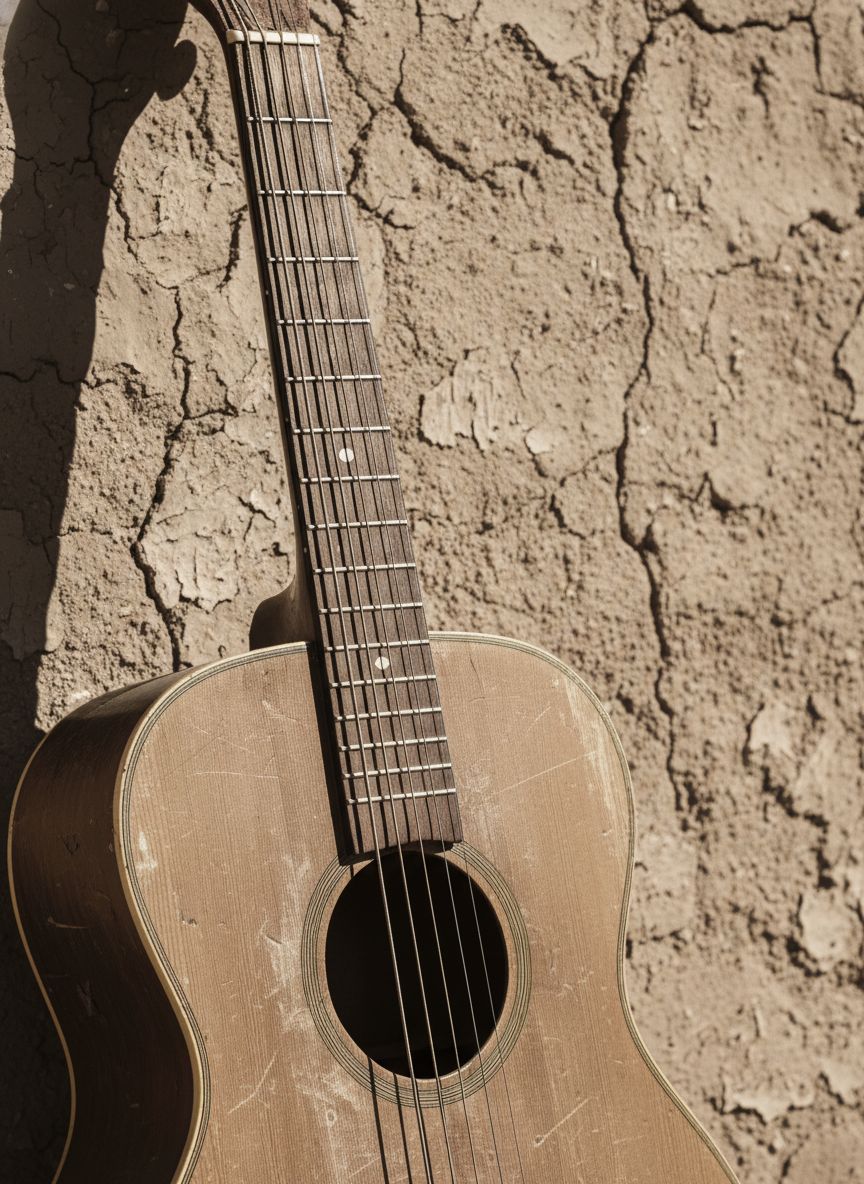
When I sit down with the Martin and a half-finished lyric at midnight, I'm not thinking about genre. I'm thinking about the song — what it needs, what it's trying to say, whether it's honest enough to deserve to exist. But the tradition I'm working in gives me permission to follow the song wherever it goes. If Better To Breathe wants to be a quiet, aching folk ballad, it can be that. If Wide Open Eyes wants to build into something bigger and more electrically alive, it can do that too. Americana doesn't ask you to choose one sound. It asks you to be truthful.
The Music That Stays
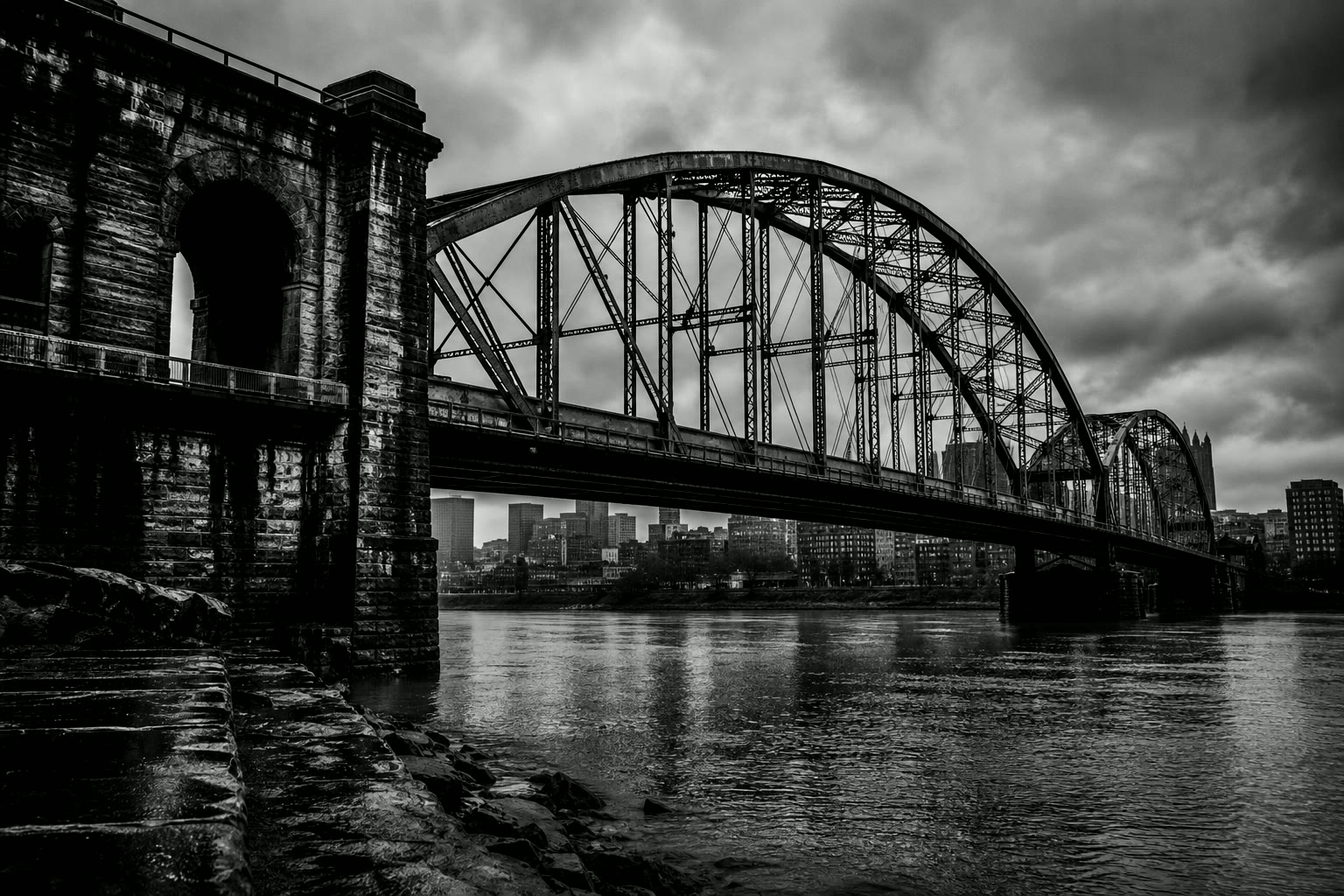
I think the best definition of Americana I've ever heard isn't a definition at all. It's something a friend said to me years ago, after a show at a small bar in Lawrenceville — one of those Pittsburgh neighborhoods tucked between a hill and a river, easy to miss if you don't know to look. He said, "That's the kind of music that sounds like it was always there."
That's what I'm after. Not novelty. Not trendiness. Music that sounds like it's been waiting in the ground, and you just happened to dig in the right spot. Music that carries the old songs forward without embalming them. Music that sounds like it belongs to a place — to the hills and the rust and the rivers.
If you go through my catalogue, you'll hear twenty years of trying to get closer to that. From the early recordings on Den Of Thieves — raw, searching, a songwriter testing the edges — through Of The Sun and Blackout Asylum, all the way to A Whisper Of Ruin and whatever comes next. The songs change. The sound evolves. But the orientation stays the same: toward roots, toward honesty, toward the kind of song that sounds like it was always there, waiting to be found.
Americana isn't a genre so much as a conversation. Between the old and the new. Between the land and the people on it. Between the song you learned from a record and the one you wrote at 2am because you couldn't sleep. It's the music that happens when you stop performing and start listening — to the tradition, to the room, to whatever's been growing quietly in the soil beneath your feet.
That's the best answer I've got. And like most good answers, it's really just an invitation to go listen for yourself.