A Whisper Of Ruin: The Full Story Behind the Album
The complete story behind Jay Trainer's A Whisper Of Ruin — Deluxe Edition: how fifteen San Francisco-recorded tracks were shaped by loss, collaboration, and the decision to expand a finished album into something bigger.
A Whisper Of Ruin started as a finished album and became something larger — fifteen tracks spanning San Francisco studio recordings, live captures, acoustic reworkings, and three songs that refused to wait. All music was written by Jay Trainer, recorded in San Francisco, and performed by multiple musicians.
A Whisper Of Ruin — Deluxe Edition is fifteen tracks, nearly three years of living, and the closest thing I have to a definitive record. It is an album about loss that doesn't drown in it, about place and distance and what follows you across a continent. The music was written by me, recorded in San Francisco, and brought to life by multiple musicians. And it became — over time, through accident and stubbornness — something bigger than I ever planned.
This is the full story. Not the short version. The whole thing.
What This Album Is
At its simplest, A Whisper Of Ruin — Deluxe Edition is a collection of fifteen songs released in 2019. It includes original San Francisco studio recordings, two live cuts from the same era, acoustic reworkings of earlier tracks, and three songs that didn't exist when the original album was finished. All of the music was written by me, recorded in San Francisco, and performed by multiple musicians.
But that description doesn't really tell you what it is.
What it is — what it became — is a document. Not a snapshot. A document, the way a long letter is a document: layered, messy in places, revised, honest in ways that only become clear after you've read the whole thing. The deluxe edition isn't a cash grab or a marketing exercise. It's what happened when a finished album refused to stay finished, when songs kept arriving after the deadline had passed, when live performances revealed things that the studio versions had been hiding.
You can listen to the full album here. But if you want to know where it came from — why it sounds the way it sounds, why it's sequenced the way it is, why certain songs almost didn't survive — that's what this is for.
How It Started
The honest answer is that I don't know exactly when it started. Songs don't announce their beginnings. They accumulate. A phrase here, a chord progression there, a feeling that won't leave you alone at two in the morning. By the time you realize you're writing an album, you're already halfway through it.
What I do know is that the seeds were old. Some of the songs on this record — Better To Breathe, Fractured, By Cover Of A Great Lie — existed in earlier forms going back years. Better To Breathe first appeared on Of The Sun in 2010. Fractured has been with me since the earliest sessions. These weren't new songs. They were songs that had been living with me, changing shape as I changed, waiting for the version of themselves that would finally feel right.
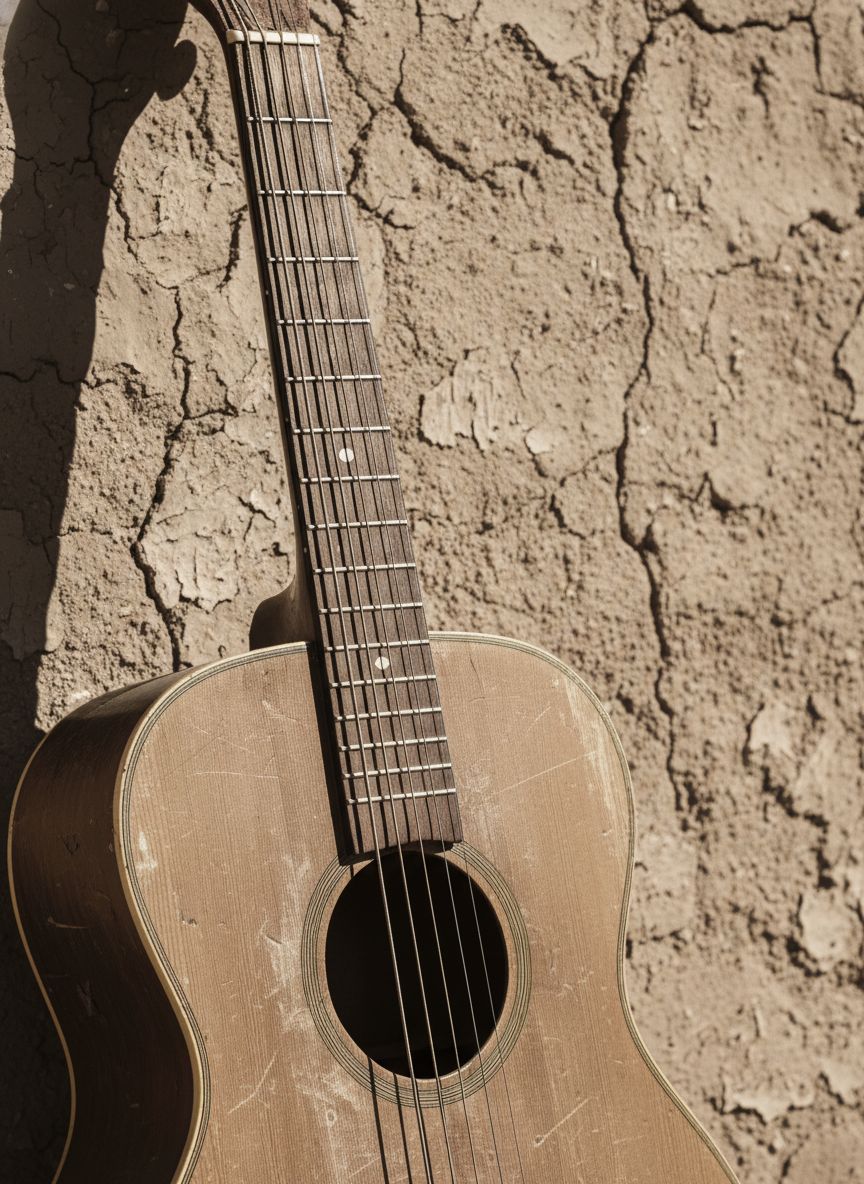
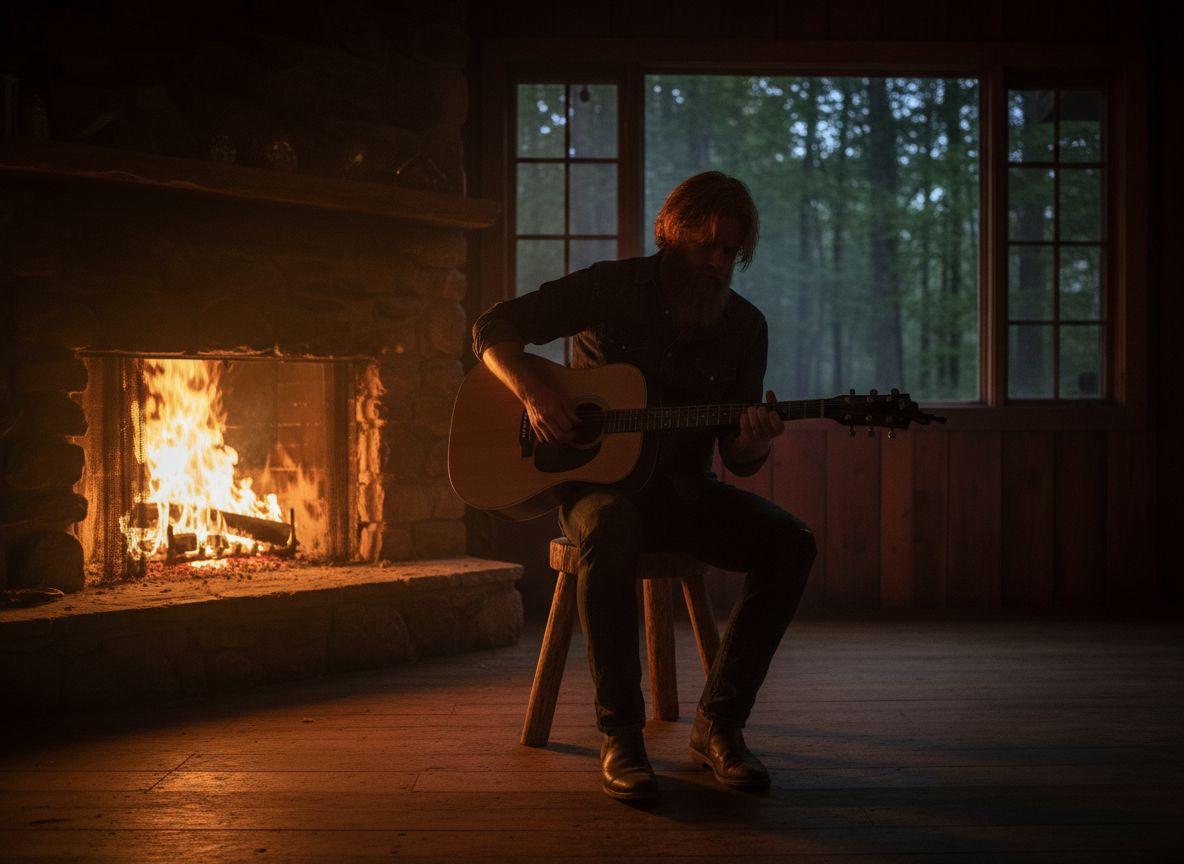
The new material — The Southern Winds, Lovely In Black, Everything We Never Said, While The World Burns Down — came during a period when I wasn't trying to write an album at all. I was just playing. Sitting with the Martin, usually late, running through chord patterns and humming until something caught. When it caught, I'd follow it. When it didn't, I'd go to bed. There was no agenda. No concept. Just the guitar, the city, and whatever wanted to come through.
That's how most of my best work happens. Not through discipline or ambition, but through a kind of patient surrender. You show up, you sit with the instrument, and you wait. Sometimes nothing comes. Sometimes everything does.
The Original Sessions
I've written about the deluxe sessions before, but it's worth saying again here, because the setting and the musicians are as much a part of this album as any of the songs.
A Whisper Of Ruin belongs to San Francisco. The songs were written and recorded there, and the record carries the sound of multiple musicians listening to each other in real time. When players are locked in around a song, the room plays back. It adds something. A resonance, a breath, a quality that I couldn't have made alone.
Most of the original sessions followed that principle. Keep the song alive. Let the musicians breathe. Let the takes carry the friction and warmth of people making decisions together instead of sanding every edge flat. I wanted the recordings to feel present, not overly polished.
The philosophy was simple: get it in one take if you can. Don't overproduce. Don't layer things that don't need to be layered. If the song can't survive as a voice and a guitar, it's not finished yet. Go back and rewrite it until it can.
That philosophy shaped everything. You can hear the imperfections — a slightly rushed transition, a breath taken a beat too early, the moment when the band leans into a change and finds it together. I left all of it. Those aren't flaws. They're proof that human beings were in the room, playing something that mattered.
The Southern Winds
The Southern Winds opens the album, and it opens it the way I wanted the whole record to feel: like stepping outside on a night when the air is moving. There's a restlessness to it, a sense of something approaching that you can't quite name.
I wrote it during a stretch of warm autumn nights in San Francisco, when the air had that strange coastal restlessness and the season couldn't decide what it wanted to be. It felt disorienting, like the city had shifted on its axis. I picked up the guitar and started chasing that feeling.
The song is about thresholds. About standing in the space between where you've been and where you're going, and not being able to see either one clearly. It's the right way to begin a record that is, at its heart, about transition.
Years later, I went back and re-recorded it as The Southern Winds (East Coast Mix) — a reimagined version with wider arrangements. But the original, the one that opens this album, is still the one that feels truest. Just the guitar, the voice, and the room.
Lovely In Black
Lovely In Black almost didn't make the album. I recorded it three separate times and threw away every version. The song kept resisting me. It had a melody I loved — one of those melodies that arrives fully formed and won't let you change a note of it — but the lyrics wouldn't settle. They kept shifting, saying too much, trying too hard.
The version that survived was the last attempt, and it only happened because I stopped trying to make the song do what I wanted and started letting it do what it needed. I sat down one night with no plan, played the opening chord, and just sang. What came out was darker than what I'd been writing, more direct, less metaphorical. A song about someone specific, though I'll leave the specifics alone.
It's track four on the record, and I think its placement matters. By that point, the album has established its sound — the warmth, the room, the gentle pacing — and Lovely In Black cuts through that warmth like a cold draft. It needed to be there. The album needed that disruption.
Better To Breathe
If A Whisper Of Ruin has a center of gravity, it's Better To Breathe. Not because it's the best song — I don't think about the songs that way — but because it's the one that everything else orbits around.
I first wrote Better To Breathe years before this album existed. The earliest version appeared on Of The Sun in 2010, and a different acoustic take showed up on Den Of Thieves in 2015. By the time I was building A Whisper Of Ruin, the song had been with me for nearly a decade. It had grown up alongside me. It had absorbed everything that had happened in those years — the losses, the changes, the slow accumulation of experience that turns a young man's song into something with weight.
The version on this album is the one I'd been working toward all along, even though I didn't know it at the time. It's fuller than the early recordings. More patient. It breathes — which is the whole point, isn't it? The title is an instruction, a reminder: it is better to breathe. To slow down. To let the moment have its full duration instead of rushing through to the next thing.
When this version came together, I remember knowing — even while it was happening — that this was the version. After all those years, all those attempts, this was what the song had been trying to become.
The acoustic reworking — Better To Breathe (Acoustic), track thirteen — came later, during the deluxe sessions. It strips the song back even further, to just the Martin and the voice, barely above a whisper. It's the same song and it's a completely different song. That's what I love about it. That's what I love about music — the way a song can be the same words, the same melody, and mean something entirely different depending on how you play it.
Everything We Never Said
This one is exactly what the title says. It's about the conversations that don't happen. The things you carry around for years because you never found the right moment, or the right words, or the courage.
I wrote it during a long grey stretch in San Francisco, the kind where the fog settles in and makes every street feel half-remembered. I was thinking about someone I'd lost, not to death but to silence. The slow erosion of a relationship that ends not with a fight but with a gradual, mutual withdrawal into quiet.
At over five minutes, it's one of the longer tracks on the record. I needed the length. The song needed room to unfold, to circle back on itself the way those unspoken conversations do in your mind — always returning to the same point, never quite resolving. The repetition in the structure is deliberate. It mirrors the way regret works: you go over the same ground again and again, looking for the exit that isn't there.
I recorded it late one night after a long silence — I'd gone weeks without writing anything, which usually means something is building. I sat down, and the whole song came out in about twenty minutes. I barely changed a word afterward. Sometimes the songs that take the longest to arrive are the ones that come out the fastest, because they've been writing themselves in the background for months.
Blackout Asylum (Part 1)
Blackout Asylum (Part 1) is the bridge between the first half of the album and the second. It's the hinge point, the place where the record pivots from looking outward to looking inward.
The title connects to the Blackout Asylum EP, which I released as a remastered collection in 2021, but Part 1 here is its own thing — a compressed, almost claustrophobic track that deals with the experience of going dark. Not depression exactly, though that's part of it. More like the necessary withdrawal that precedes any real change. The blackout before the new signal comes through.
At three minutes and fifty-two seconds, it's tight. No wasted space. The guitar pattern is relentless and circular, and the vocal sits right on top of it, close and unadorned. I wanted it to feel like being inside someone's head — the walls close, the air still, the world reduced to the smallest possible room.
The Deluxe Expansion
When the original album was finished and released, I thought I was done. I wasn't.
Over the months that followed, three things happened. First, I kept playing the songs live, and the live performances started revealing dimensions that the studio recordings hadn't captured. Second, I went back into the room and started re-recording certain tracks acoustically, stripping them to the bone, and discovering that the bones were sometimes more beautiful than the full body. Third, new songs arrived — uninvited, unplanned, insistent.
The deluxe edition wasn't a business decision. It was an artistic one. These songs belonged together. The live cuts, the acoustic reworkings, the new material — they weren't bonus tracks. They were the rest of the story. The album as originally released was a complete statement, but it wasn't the complete statement. There was more to say.
I've written in more detail about how the deluxe sessions unfolded. The short version is: same body of songs, same San Francisco-rooted recordings, same philosophy. Record it honestly. Don't overthink it. Trust the song to know what it needs.
The Live Cuts
Voodoo Chile (Live) and Of The Sun (Live) were recorded during the San Francisco era, and they're on this album because they captured something I couldn't manufacture in the studio.
Voodoo Chile is a Hendrix song, obviously. I've been playing my own arrangement of it for years — it showed up as far back as The Waking Hours in 2006. The live version on this record is over six minutes of controlled chaos. It's looser, rougher, more dangerous than anything else on the album. You can hear the room — the venue, the audience, the particular electricity that only exists when you're playing for people and everything could fall apart at any moment but doesn't. It's track two, right after the quiet opening of The Southern Winds, and that juxtaposition is deliberate. I wanted the listener off-balance early.
Of The Sun (Live) comes near the end of the record, and it serves a different purpose. It's a homecoming. The song originally appeared on the 2010 album of the same name, and hearing it performed live — with all the years of playing it folded into the performance — gives it a gravity that the studio version doesn't have. It's a song about endurance, about the light that keeps coming whether you're ready for it or not, and the live version sounds like someone who has actually endured something. Not performing endurance, but embodying it.
I'm glad these recordings exist. They're imperfect. You can hear every seam. But they're real in a way that nothing recorded alone in a room can ever fully be. Music needs witnesses sometimes.
The Acoustic Reworkings
Fractured (Acoustic) and Better To Breathe (Acoustic) are the two acoustic reworkings on the deluxe edition, and they both do the same thing: they take songs that existed in fuller arrangements and reduce them to their essential elements. Voice and guitar. Nothing else.
Fractured has been with me since the very beginning — there's a live version on The Waking Hours, a studio version on Of The Sun. By the time I recorded the acoustic version for this album, I'd been living with the song for over a decade. What surprised me was how much the song had changed without my changing a single note. The melody was the same. The words were the same. But the meaning had deepened, the way a familiar landscape deepens when you've walked it enough times to notice things you missed the first hundred times through.
The acoustic take is under three minutes. It's the shortest version of Fractured I've ever recorded, and it's the most honest. There's nowhere to hide when it's just you and the guitar. Every hesitation, every breath, every slight imperfection in the vocal — it's all there. I think that's why it works. It sounds like a person, not a production.
Her Mind
Her Mind closes the album, and it's the last song I wrote for it. It didn't exist when the original record was finished. It didn't exist when I started the deluxe sessions. It arrived late, the way the most important things often do, and once it arrived, I knew it was the ending.
I won't say too much about what the song is about, because I think it speaks for itself. But I will say this: it's the most quiet song on the record, and it was the hardest to write. Not technically — technically it's simple, almost fragile. But emotionally, it required going somewhere I'd been avoiding. There are songs you write because you want to, and there are songs you write because you have to. Her Mind was the latter.
It's three minutes and twenty-nine seconds. It's just the guitar and the voice and the room. The song came out in one take, start to finish, and I knew I wouldn't need to do it again.
Putting it last was the only possible choice. After fourteen tracks of building and deconstructing and rebuilding, Her Mind is the exhale. It's what's left when everything else has been said. It closes the door quietly, the way you leave a room where someone is sleeping.
What It Became
It's been years now since A Whisper Of Ruin — Deluxe Edition was finished, and I think I finally have enough distance to see it clearly.
It's not a perfect album. I don't believe in perfect albums. It's too long in places, too quiet in others, and the sequencing — which I agonized over — probably still isn't exactly right. But it's honest. It's the most complete thing I've made. If someone came to me and said, "I've never heard your music — where do I start?" — this is the record I'd hand them. Not because it's the best entry point, but because it contains everything. The studio work and the live work. The old songs and the new songs. The full arrangements and the stripped-back bones. The fire and the ash.
I think about this album the way I think about cities that change you — as a place I know so well that I'm still discovering things about it. Every time I listen back, I hear something I'd forgotten, or something I didn't notice the first time. A phrase that lands differently now. A pause that means more than it used to. The songs keep changing because I keep changing, and the recordings — frozen in time as they are — somehow change with me.
The Martin still sounds like home. The songs, I think, are still doing what they've always done: waiting for someone to sit down, listen, and hear what they need to hear.
If you haven't heard it yet, the album is here. And if you want to hear everything else — the records that came before and after, the full arc of this music — start here.
Thanks for reading. Thanks for listening. It means more than you know.